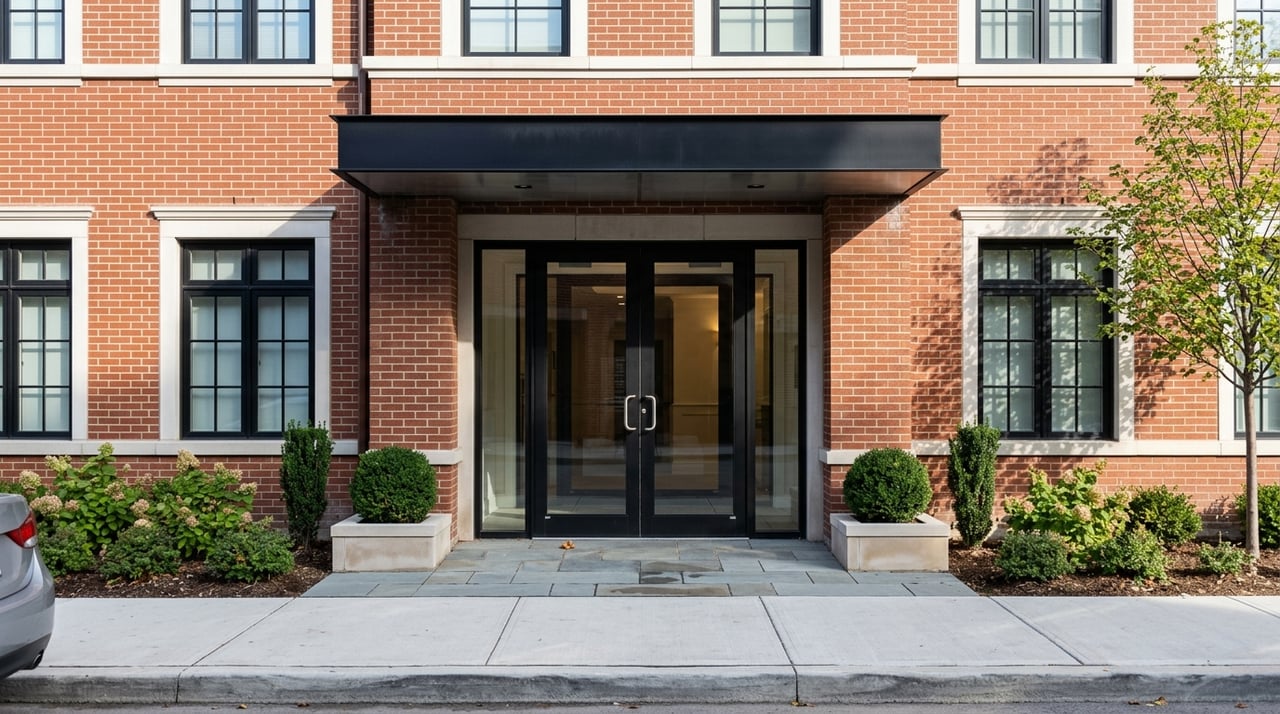
If you live in or near New York City and want Fairfield County exposure without paying Greenwich-level prices, Stamford condos deserve a serious look. You are likely trying to balance entry cost, rental demand, and resale flexibility, not just buy a trophy address. The good news is that Stamford checks many of those boxes for investor-minded buyers who want a commuter-friendly market with real leasing depth. Let’s dive in.
Why Stamford stands out
For NYC-focused investors, Stamford offers something that is getting harder to find: a lower condo buy-in paired with a large renter base and strong transit access. That mix can support both leasing and resale, especially if your strategy centers on commuter-oriented housing.
Stamford had an estimated population of 139,134 in 2024, and its housing profile is notably renter-heavy. Apartments.com reports that 54% of Stamford residents rent, compared with 33% in Greenwich. For condo investors, that matters because a larger renter pool can create more demand for attached housing and a broader audience when it is time to lease or sell.
Transit is another major part of the story. Stamford Station offers Metro-North access along with Amtrak and CTtransit connections, which strengthens its appeal for people who need regular access to New York City and the surrounding region. For investors, that kind of connectivity can widen the tenant pool and support long-term marketability.
Stamford vs. Greenwich for investors
Greenwich and Stamford are often discussed together, but they serve different investor goals. If your focus is income efficiency and liquidity, Stamford generally presents the more practical case.
In 2025, Stamford recorded 544 condo closings, with a median condo price of $445,000 and a median of 14 days on market. Greenwich’s 2025 condo and co-op market recorded 174 closings, with a median sale price of $960,600 and an average of 54 days on market. Put simply, Stamford offered a much lower entry point and faster turnover.
That pricing gap also changes the yield picture. Apartments.com lists Stamford’s average condo rent at $2,851 per month, while Greenwich’s average condo rent is $4,450 per month. Using current condo rents and 2025 closing medians, the rough gross-yield proxy works out to about 7.7% in Stamford versus 5.6% in Greenwich.
It is important to read those numbers correctly. They are not cap rates, and they do not account for HOA fees, taxes, repairs, vacancy, insurance, or financing. Still, they are useful as a quick directional screen when you are comparing two nearby markets.
What Stamford market activity tells you
A smart investor market usually shows enough transaction volume to support exits without flooding the market with supply. Stamford’s recent condo numbers suggest that balance may be in place.
Brown Harris Stevens reported 544 condo closings in Stamford in 2025, along with an average sold price of $489,077. The market also posted a 102.3% condo list-to-sale ratio, which suggests many buyers were still paying close to asking.
In the first quarter of 2026, Stamford remained active, with 113 condo closings and an average closing price of $476,954. Condo inventory stood at 83 units on March 31, 2026, up 22.1% from a year earlier. That increase in inventory is worth watching, but it does not erase the broader story of healthy turnover.
For an investor, this points to a market where condos are still moving. That can be helpful when you want more flexibility on your eventual exit, whether that means selling after a hold period or repositioning your portfolio.
Rental demand is real, but not every unit wins
Stamford’s rental story is supportive, but it is not automatic. You still need to buy the right unit in the right building at the right price.
Downtown and Harbor Point-style properties tend to concentrate professionally managed rental stock, where amenities, presentation, and speed to market matter. That is especially relevant for remote investors, because these are often the properties where polished digital marketing can make the biggest difference in lead conversion and lease-up speed.
At the same time, Fairfield County’s multifamily market has seen more new construction. Institutional Property Advisors reported that heavy construction pushed local Class A apartment vacancy to nearly 7% in 2025, the highest level in more than two years. For condo investors, that means newer luxury inventory may face more competition and may need sharper pricing or stronger presentation to lease quickly.
This does not make Stamford a weak bet. It simply means you should be selective. An older, well-located condo with strong access and practical features may outperform a flashier unit if the latter is competing with a wave of new luxury rentals.
Focus on the building, not just the zip code
In condo investing, the building can matter as much as the city. Two units with similar square footage can perform very differently based on association rules, financial health, and everyday livability.
Before you buy, you should underwrite the building as carefully as the unit itself. Key items to review include:
- Rental caps or lease minimums
- Any waiting period before a unit can be rented
- Owner-occupancy requirements
- HOA reserve strength
- Special assessment history
- Parking rights
- Pet rules
- Flood and insurance exposure
- Storage access
- Elevator and amenity condition
- Noise factors, including train-adjacent exposure
These details can directly affect rentability, tenant appeal, and net returns. A condo that looks good on paper can become far less attractive if the association restricts rentals or if a major assessment is around the corner.
Why presentation matters more than many investors think
If you are buying from NYC or managing from a distance, your future tenants may shop the same way you do: online first. That makes a condo’s digital presentation a real investment variable, not just a marketing extra.
Apartments.com research says 85% of renters start on rental-finding platforms. In a market like Stamford, where commuters and remote movers often rely on online screening, strong visuals, clear floor plans, and professional video can help reduce vacancy time.
That is one reason professionally presented units can stand out, especially in downtown and Harbor Point-style inventory where renters compare multiple similar options quickly. If your condo needs better photos, a more compelling listing package, or a pricing adjustment to compete, those factors should be part of your plan from day one.
For investors who value efficient leasing, this aligns closely with a more modern, media-driven approach. A well-positioned condo with polished presentation can often create a stronger first impression and a faster path to qualified interest.
When Stamford makes the most sense
Stamford condos tend to make the most sense when your thesis is straightforward. You want a moderate purchase price, a commuter-oriented tenant pool, decent gross yield potential, and a market with more transaction depth than a prestige-first town.
That does not mean Greenwich lacks value. Greenwich can appeal to buyers who prioritize scarcity, prestige, and higher-end lifestyle positioning. But if you are focused primarily on rental math and easier turnover, Stamford generally offers the more efficient tradeoff.
For many NYC-focused investors, that is the key distinction. Stamford behaves more like a broad, active rental market, while Greenwich often functions more like a premium owner-oriented market with a different risk-reward profile.
A smart way to evaluate your next move
If Stamford is on your shortlist, approach it with a clear framework. Compare building rules, model realistic carrying costs, study how your unit would compete against newer rentals, and think carefully about how it will be marketed when it is time to lease.
The best investment decisions usually come from combining market data with local context. In Stamford, that means understanding where demand is deepest, which buildings are easiest to rent, and how a property will present to an increasingly digital audience.
If you are weighing Stamford against Greenwich or another Fairfield County option, a local advisor can help you read beyond the headline numbers. To talk through condo opportunities, remote buying strategy, or leasing presentation in lower Fairfield County, connect with Noah Finz.
FAQs
Are Stamford condos a good option for NYC-focused investors?
- Yes, Stamford can be a strong option if you want lower entry costs, direct rail access, a larger renter base, and better liquidity than nearby premium markets like Greenwich.
How do Stamford condo prices compare with Greenwich condo prices?
- In 2025, Stamford’s median condo price was $445,000, while Greenwich’s median condo and co-op price was $960,600, making Stamford a much lower-cost entry point.
What is the rental yield outlook for Stamford condos?
- Using average condo rent and 2025 median sale price, Stamford’s rough gross-yield proxy is about 7.7%. That is only a directional estimate and does not include ownership costs.
What should you review before buying a Stamford investment condo?
- You should review rental restrictions, HOA finances, reserve levels, assessment history, parking, pet rules, storage, insurance exposure, amenities, and any noise or location issues that could affect leasing.
Is Stamford or Greenwich better for cash-flow-focused condo investing?
- Based on 2025 pricing, market turnover, and average rent comparisons, Stamford generally looks stronger for cash-flow and liquidity, while Greenwich fits more of a prestige or wealth-preservation strategy.