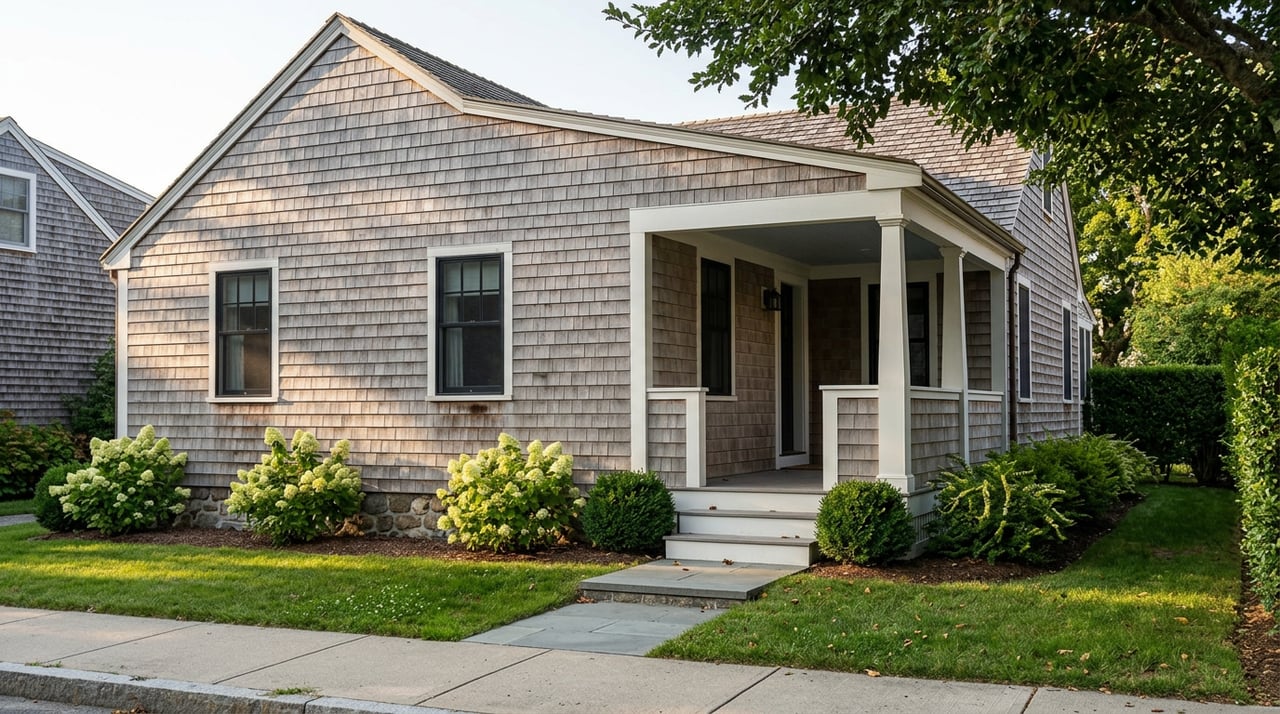
What does $2.3 million buy in Cos Cob?
The honest answer is that it depends entirely on which few blocks you're standing in, and the median sale price won't tell you that. As of early 2026, Cos Cob homes were closing at a median of $2,288,250, moving in an average of 9 days, and selling at 101.0% of list price with just 1.5 months of inventory on the market. Those numbers describe a seller's market with almost no slack. What they don't describe is a single, coherent product. They're an average of two housing types that rarely compete for the same buyer, sit on opposite ends of the neighborhood, and have almost nothing in common except a shared zip code.
If you're cross-shopping Cos Cob against Riverside or Old Greenwich, that distinction matters more than the headline number.
Two Products, One Village
Walk down to the water in Cos Cob and you'll find a corridor of condominium complexes strung along River Road and the Mianus River, most of them built during a wave of construction in the late 1970s and 1980s. There are more than a dozen of these communities, adding up to roughly 400 units total. Palmer Point alone accounts for 74 of them, a townhouse complex built in 1979 on the Cos Cob harbor with its own marina and boat slips available to residents. A few blocks and a few decades apart in style, you'll find Meads Landing, River Landing, Lansing Meadow, and Rocky Brook Woods, each smaller, each with its own HOA, snow removal, and grounds care rolled into a monthly common charge.
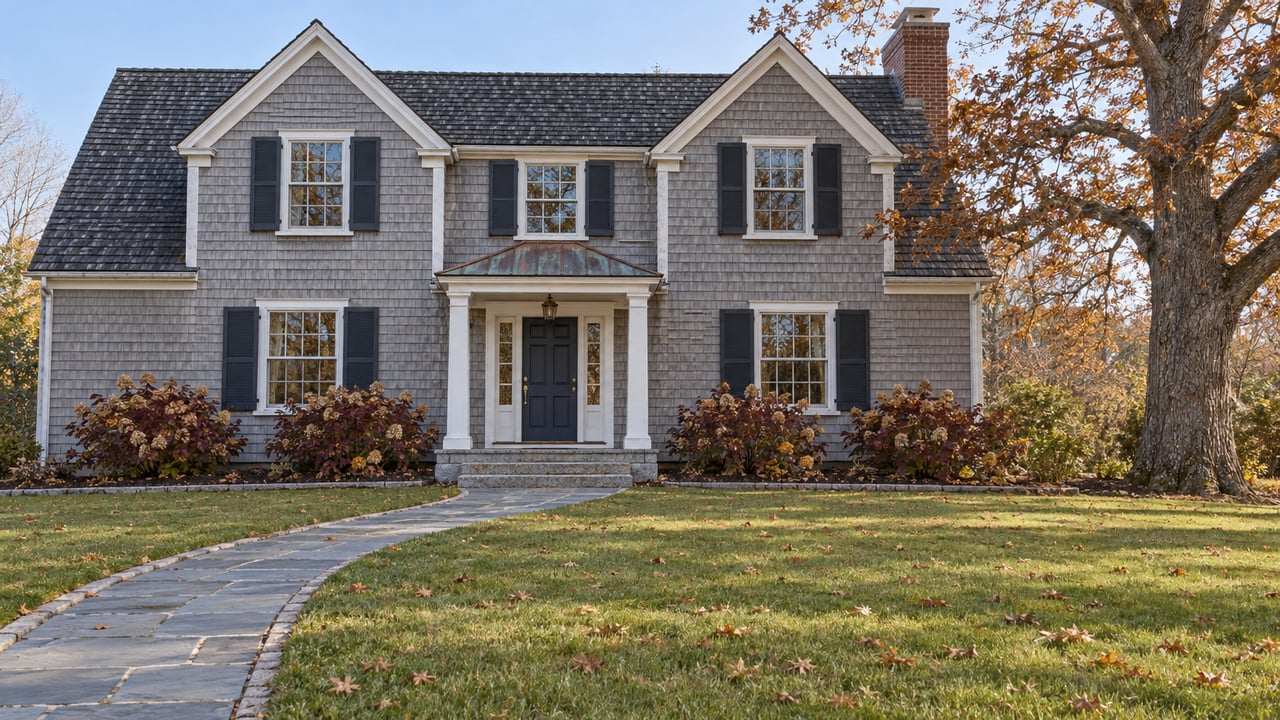
Head the other direction, away from the harbor and toward Stanwich Road and Cognewaugh Road, and the housing stock changes completely. This is where you find the single-family homes on quarter-acre to full-acre lots, the older colonials being renovated room by room, and a newer wave of architect-designed construction going up on lots that were, until recently, occupied by smaller mid-century houses.
These are not two ends of the same spectrum. They're two different products that happen to share a school district and a train station. A condo buyer at Palmer Point and a buyer closing on a new single-family build off Cognewaugh Road are not bidding against each other, are not touring the same open houses, and are not reading the same comps. When both transactions get folded into one "Cos Cob median," the number that comes out the other end doesn't represent either of them particularly well.
Why the Harbor Got a Condo Boom and the Hillside Didn't
Cos Cob's split personality has a history behind it. The village grew up as a working seaport, shipping potatoes, onions, and apples out of Cos Cob Harbor through the 1700s and 1800s, before the railroad arrived and a dam on the Mianus River cut into the harbor's depth and its usefulness as a commercial port. That same waterfront, no longer working docks, became attractive for denser residential development a century later. It's also where the Cos Cob School of American Impressionists gathered at what's now the Bush-Holley House, a National Historic Landmark that still anchors the village's identity as something distinct from the rest of Greenwich.
The zoning map still carries that history. The blocks closest to the harbor and the train station were platted for higher density, which is exactly why the condo boom landed there and not further inland. Move away from the water toward Stanwich Road and the zoning opens up into larger single-family lots, the kind that support the renovation and new-construction activity happening there now. One recent single-family listing in the village core sat on a 0.277-acre lot, illustrating just how tightly the inner village's zoning caps square footage relative to lot size. Move a few blocks toward Stanwich or Cognewaugh and that ratio loosens considerably, which is part of why newer, larger homes keep appearing there rather than near the harbor.
None of this shows up in a median. It shows up in the deed history and the zoning map, which is exactly why it's worth knowing before you start touring.
The Two Segments Are Both Hot, Just Not Together
It would be simpler if one segment were cooling while the other ran hot, because then the blended median would at least be trending in a legible direction. Instead, both segments have been climbing, just from very different starting points. Townwide, the Greenwich Association of Realtors reported that the median condo and co-op sale price rose 20.1% year over year to $1,075,000 in the second quarter of 2026, while the median single-family sale price rose 15.1% to $3,655,000 over the same period. Two segments, both appreciating fast, separated by more than $2.5 million in median price.
Cos Cob doesn't sit outside that pattern. It sits at the intersection of it, with a harbor's worth of condo inventory pulling the local median down and a hillside's worth of new and renovated single-family construction pulling it back up. A buyer who anchors to "$2.3 million" as a planning number and then goes shopping for a two-bedroom unit at one of the River Road complexes is going to be confused by how far their budget stretches. A buyer using that same number to budget for a lot on Cognewaugh Road is going to be confused by how little it covers.
What This Means If You're Actually Shopping
Before you treat any Cos Cob number as a planning anchor, it's worth asking which of the two markets it's describing. A few questions do most of the work:
- Is the comp a condo or a single-family home? The two segments don't share a price ladder, so a condo comp tells you nothing about single-family pricing and vice versa.
- If it's a condo, which complex, and when was it built? A 1979 complex like Palmer Point carries a different maintenance and reserve-fund profile than a smaller, newer building, even if the square footage looks similar on paper.
- If it's a single-family home, is it in the denser village core near the harbor or further out toward Stanwich and Cognewaugh? The zoning envelope, and therefore the ceiling on what can be built or added, is genuinely different depending on which side of that line you're on.
- What's the carrying cost structure? A condo's monthly common charge covers heat, water, trash, snow removal, and grounds care in most of these complexes, which changes the real monthly cost comparison against a single-family home with none of that built in.
None of these questions are answerable from a median price. They're answerable from the specific listing, the specific complex, and the specific zoning designation on the lot, which is the level of detail a median is designed to erase rather than reveal.
FAQ
Do Cos Cob condos appreciate at the same pace as the single-family stock? Not based on the most recent townwide data. The condo and co-op segment across Greenwich rose 20.1% year over year in the second quarter of 2026 while single-family rose 15.1% over the same period, both strong, but starting from very different price bases and driven by different buyer pools.
Is a Cos Cob condo a reasonable option for a remote or investor buyer? It can be, particularly in complexes near the Cos Cob train station with a straightforward commute to Grand Central. The specifics of HOA restrictions, rental caps, and reserve fund health vary complex by complex, which is exactly the kind of detail worth confirming before making an offer rather than after.
How do I tell which market a specific Cos Cob listing belongs to? Location relative to the harbor and River Road is the fastest signal. Property type, condo versus single-family, is the clearest one. From there, the zoning designation and lot size on the town's own records will tell you which envelope you're actually buying into.
If you're weighing a move into Cos Cob and want to know which side of this split actually fits your budget and your timeline, that's exactly the kind of conversation worth having before you start touring rather than after you've fallen for a listing. Noah Finz works this market block by block, with the off-market relationships and broadcast-quality listing presentation to match. Let's Connect.
This article is general information, not legal, tax or financial advice. Consult a qualified professional about your situation.