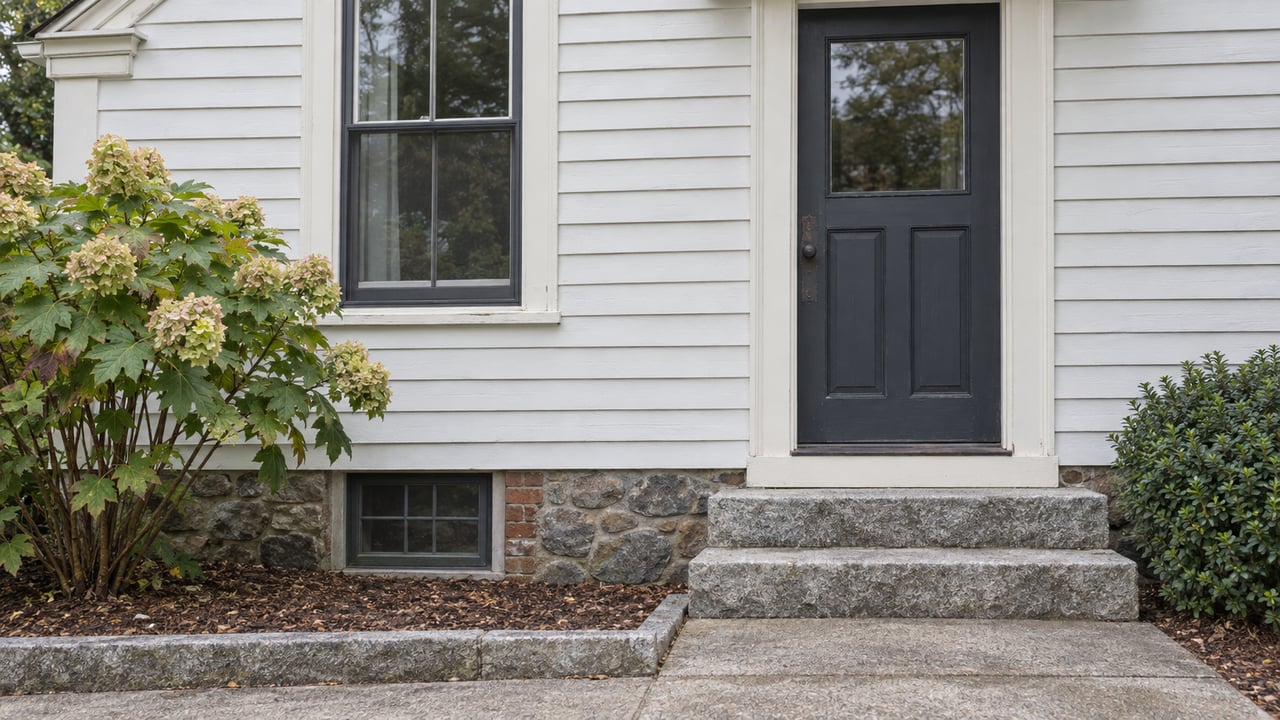
A seller in Byram lists a three-bedroom cape, gets an offer inside two weeks, and then the buyer's inspector asks a question nobody prepared for: has this house ever had oil heat, and if so, where did the tank go. The seller doesn't know. The house was bought from an estate a decade ago. Nobody mentioned a tank because nobody thought to ask.
That scenario is not rare in Byram. It is closer to routine, and the reason has less to do with bad luck than with the neighborhood's own history. Byram's identity was built on industrial and working-waterfront activity on the western edge of Greenwich, and homes from that era ran on oil long before gas conversion became standard. A seller who treats the oil tank question as a footnote is treating a structural probability as an edge case.
What the Disclosure Form Actually Asks
Connecticut does not let a seller stay quiet on this. Under the state's Uniform Property Condition Disclosure Act, anyone selling a one-to-four-family home has to hand the buyer a written Residential Property Condition Report before any binder or contract gets signed. The current version of that form, revised in July 2025, runs nine pages and 65 numbered questions. Question 20 is the one that matters here. PropCash says Question 20 asks whether an underground storage tank ever sat on the property during your ownership, and if it was removed, it wants the date, the name and address of the company that removed it, and whatever documentation you have.
Skip the form entirely and the law has a built-in penalty.
What the form does not require is removal. The obligation is honesty about what you know. If you genuinely don't know the tank's age or whether it was ever there, the form has a legitimate answer for that too: unknown. What you can't do is answer no when you know the answer is yes.
Greenwich Adds Its Own Step
State law sets the floor. The Town of Greenwich adds a second layer that a generic Connecticut disclosure guide won't mention, because it's specific to how the local Fire Department handles tanks that are no longer in use.
If a tank is still actively heating the house, a Byram homeowner can keep using it. If it's not in use, the town's published guidance treats "properly abandoned in place" as a defined procedure with specific steps, not a vague suggestion:
- All product is pumped out and the tank is cleaned of sludge.
- Every fill, vent, supply, and return line is disconnected and capped.
- The tank is filled with an inert material, typically foam or concrete slurry. Sand is accepted too, but only if the top of the tank is removed first so the void actually fills.
- Soil around the tank, down to its bottom, gets sampled and analyzed by a lab to confirm the tank never leaked.
- A drawing showing the tank's exact location, with dimensions measured from a fixed landmark, gets produced.
- A written report goes to the Fire Department on the removal company's letterhead, listing the date, address, property owner, tank size, and attaching both the lab results and the site drawing.
If that soil sample comes back showing contamination, the process changes immediately. The Fire Marshal's office has to be notified and the situation gets reported as a spill, which shifts the timeline and the cost from a paperwork exercise into an environmental cleanup.
Why This Shows Up More Often in Byram
Newer construction in other parts of Greenwich, particularly homes built or substantially rebuilt after the wider shift to gas heat, simply never had an underground oil tank to begin with. Byram's housing stock carries a different history. Its roots as an industrial and working-waterfront corner of town mean a meaningful share of its homes predate that conversion, and many changed hands multiple times without anyone formally abandoning or documenting what was under the yard.
That history is also part of why Byram has historically carried one of the more accessible price points inside Greenwich's own range, alongside neighboring Glenville. Accessible entry pricing and older, undocumented mechanical systems tend to travel together. A buyer drawn to Byram for the value is often buying a house old enough to have run on oil at some point, whether the current listing sheet says so or not.
Here is roughly what each scenario costs, so a seller can see where they stand before an inspector forces the question:
| Situation | Typical cost | What triggers it |
|---|---|---|
| Locate a suspected tank (sweep) | $200 to $350 | No prior documentation exists |
| Add soil testing to confirm no leak | $300 to $500 more | Sweep finds a tank |
| Remove a clean, non-leaking tank | Roughly $1,500 and up | Tank located, soil clean, owner chooses removal over abandonment |
| Remediate a confirmed leak | $20,000 to $100,000 or more | Soil sample shows contamination |
The gap between the bottom row and everything above it is the entire argument for finding out early rather than letting a buyer's inspector find out for you.
The Lender Wrinkle
Even when a tank isn't leaking, it can still slow down financing. Maxwell Home Inspections notes that FHA and VA loans in particular may require proof of no contamination before the lender will clear the loan to close. A buyer who loves the house and qualifies on paper can still watch a closing date slip by weeks while a soil report gets ordered, processed, and reviewed. That delay falls on both sides of the table, and it is entirely avoidable if the seller already has the documentation in hand before the buyer's attorney asks for it.
The Sequence That Saves You Weeks
A seller who wants to avoid discovering this mid-contract has a straightforward sequence available before the house ever goes live:
- Ask around and check any paperwork from prior owners for tank removal records, even old ones. The Fire Marshal's office sometimes keeps historical removal reports on file.
- If nothing turns up, order a tank sweep before listing rather than waiting for the buyer's inspector to request one.
- If a tank is found, get the soil tested immediately so you know whether you're looking at a straightforward abandonment or a remediation.
- Keep every piece of documentation, the lab results, the site drawing, and the contractor's report, together in one file so it can go straight into the disclosure form and straight to a buyer's lender if asked.
None of this requires guessing. It requires doing the work before the contract clock starts running instead of during it.
A Few Questions Worth Asking Directly
Many sellers choose removal anyway because an undocumented tank makes buyers nervous even when the soil is clean.
What if I genuinely don't know whether the house ever had oil heat? Say so on the form. Unknown is an honest and acceptable answer. What creates legal exposure is checking no when you actually know otherwise.
Does any of this apply if I'm selling a condo in Byram? The disclosure form applies to one-to-four-family dwellings, so most condo transactions fall outside this specific requirement. It's still worth asking your building's management whether any unit or common area ever had oil heat, particularly in older conversions.
If you're getting ready to list an older home in Byram and want to walk through what's actually documented on your property before a buyer's inspector does it for you, get in touch with Noah Finz. Let's connect and get ahead of it.
This article is general information, not legal, tax or financial advice. Consult a qualified professional about your situation.